


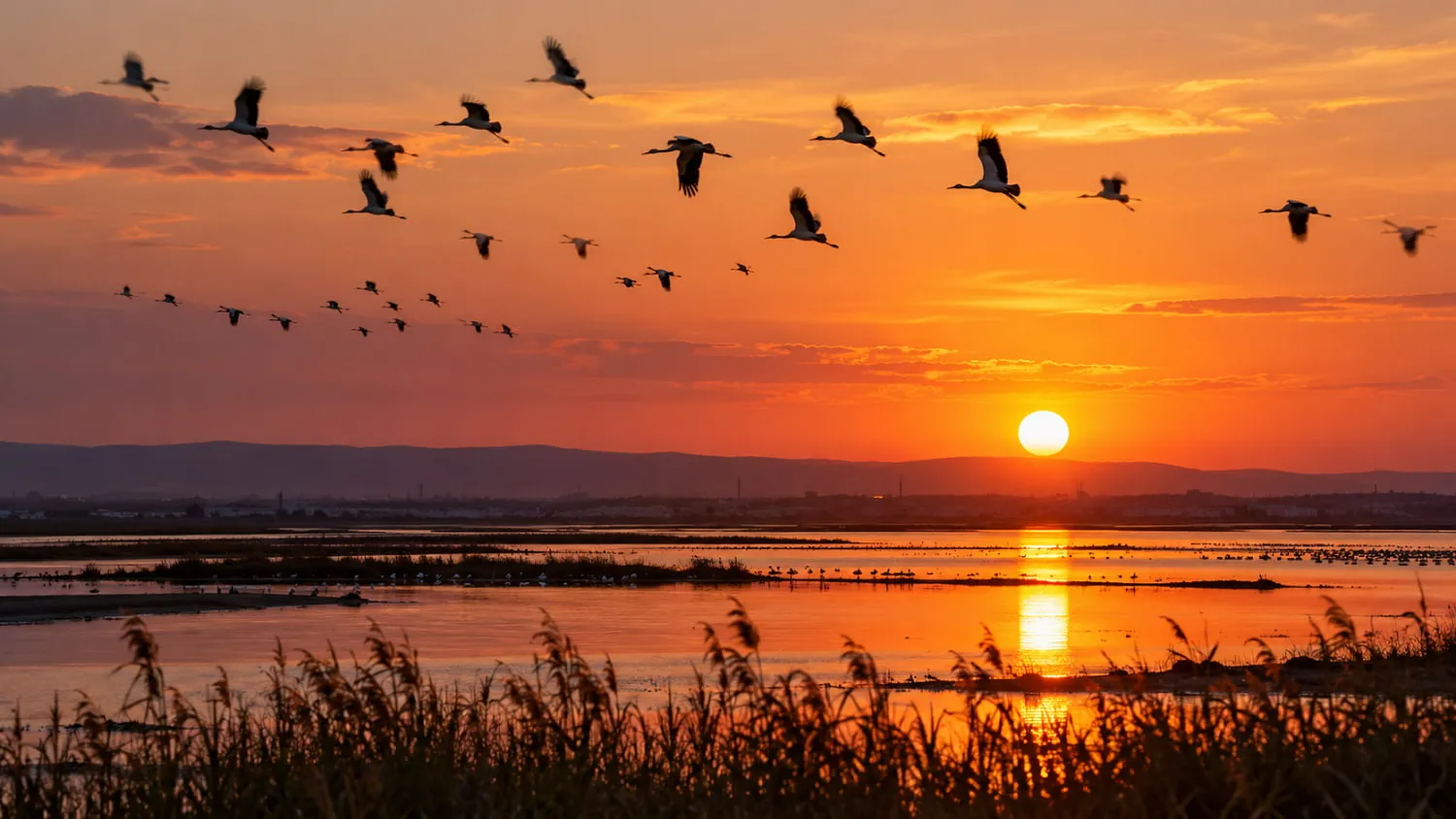

Every autumn, the sky above Burgas becomes a busy aerial corridor. Thousands of storks, pelicans and birds of prey head south, following the ancient migration route known as Via Pontica. Autumn bird migration is one of the most spectacular natural events along Bulgaria’s Black Sea coast. The Burgas Lakes offer a wonderful opportunity to witness it up close. When does migration reach its peak? Which birds can you see, and where are the best places to watch them?
Via Pontica – why do thousands of birds migrate near Burgas?

Via Pontica is one of Europe’s most important bird migration routes. Every autumn, birds from northern and eastern Europe travel along the Black Sea towards warmer regions of Africa and the Mediterranean. Many large birds avoid long flights over open water. Instead, they use rising currents of warm air to save energy.
Burgas Bay lies at a key point along this route. According to a long-term scientific study conducted between 1979 and 2003, observers recorded an average of more than 169,000 migrating waterbirds and other large birds from the groups studied, along with over 38,000 birds of prey per autumn season. These historical figures highlight the area’s exceptional importance for European bird migration.
When does autumn bird migration begin?
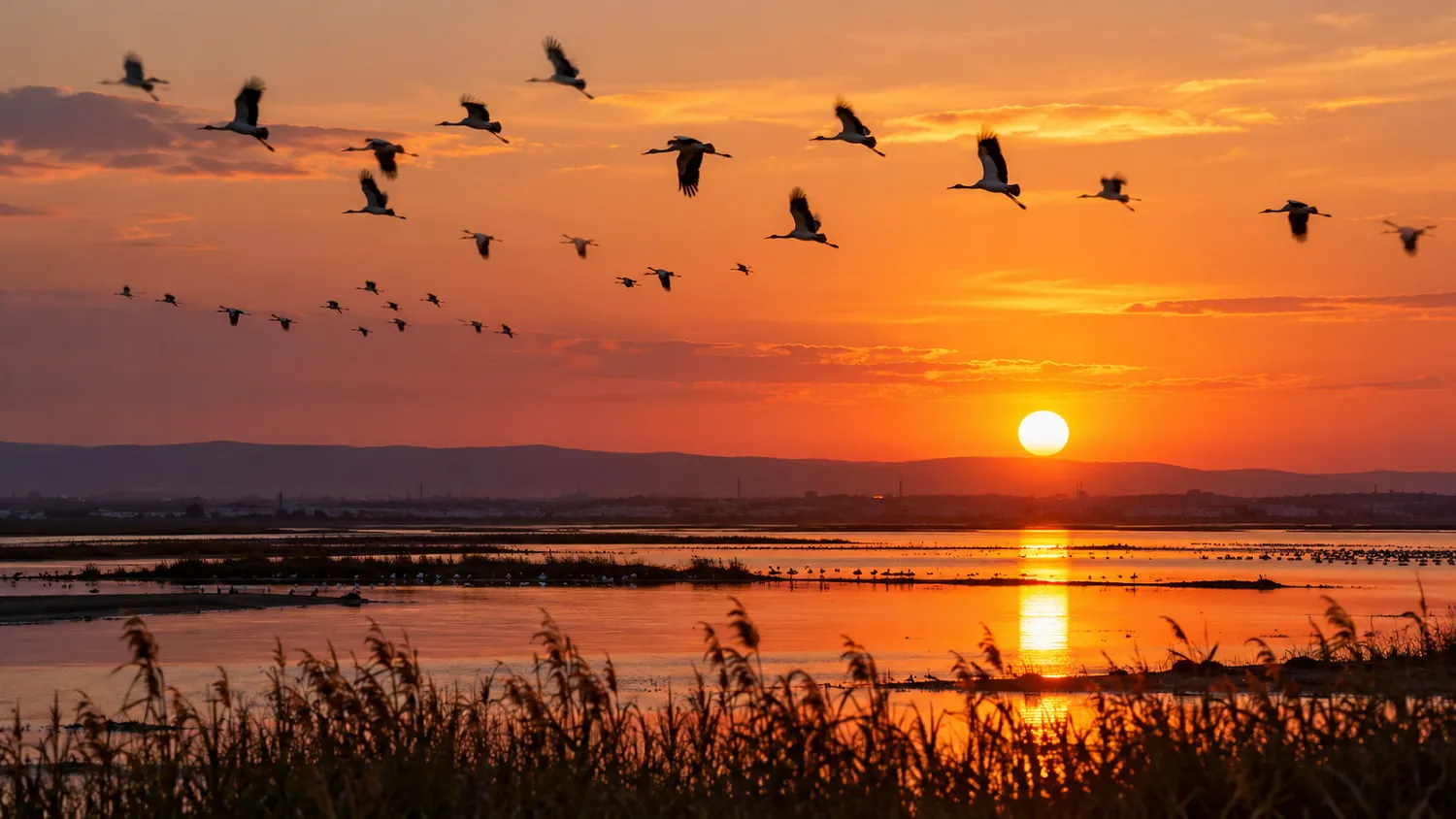
The first large flocks appear as early as August. This marks the start of the active migration of white storks. In September, the skies fill with pelicans and birds of prey. October brings new migrants, while November sees the arrival of some wintering waterbirds.
The best period for watching large-scale migration is usually from the second half of August to the end of September. However, autumn migration does not end suddenly. Different species follow their own schedules, influenced by weather and conditions along their routes.
What do the 2026 observations from Atanasovsko Lake reveal?
The bird ringing station at Atanasovsko Lake provides valuable information about bird movements. According to data published on the Trektellen platform, 1,447 birds were ringed in September 2026, compared with 386 in August. The last recorded capture date of the season was 9 October.
These figures do not represent the total number of migrating birds. They include only birds captured and fitted with identification rings. Nevertheless, the data help researchers understand seasonal activity and species diversity.
Which migratory birds can you see along Via Pontica?
The white stork is one of the most recognisable symbols of autumn migration. Large flocks often circle high above the land before continuing south. Great white pelicans also create spectacular scenes, especially when flying in long formations.
Among birds of prey, the lesser spotted eagle stands out. Its migration is particularly intense in September. Honey buzzards, harriers and falcons can also be seen. Wetlands attract Eurasian spoonbills, pied avocets and various species of plovers.
Dalmatian pelicans are especially interesting during the colder months. Greater flamingos, which can be spotted around Atanasovsko Lake, add even more colour to the autumn landscape.
Where to watch birds near Burgas
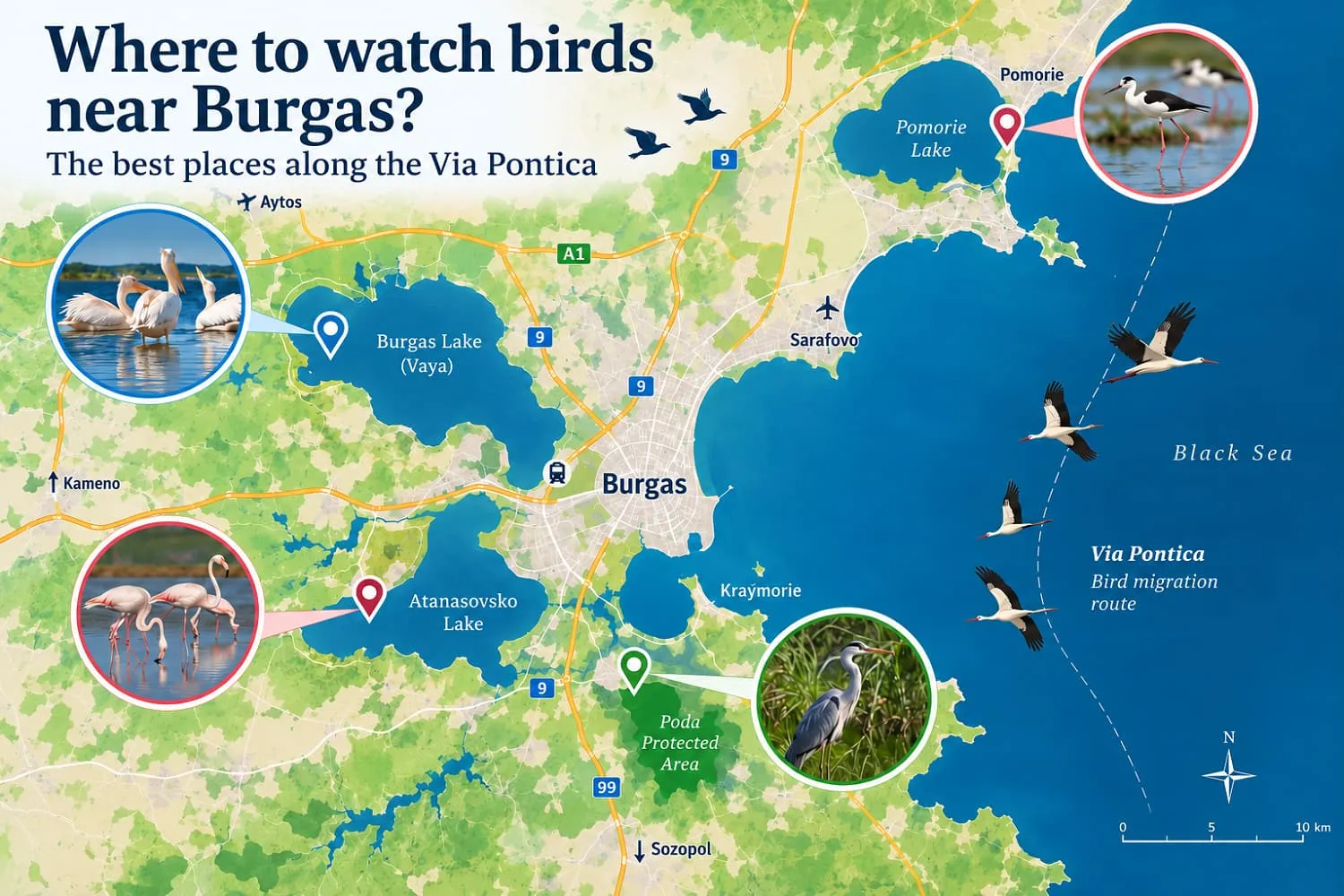
The Burgas Lakes offer several excellent birdwatching locations. Some are ideal for observing large flocks passing high overhead. Others allow visitors to watch waterbirds at closer range as they rest or search for food.
Atanasovsko Lake – the best place to watch large-scale migration
The northern part of Atanasovsko Lake is one of the best-known places for watching Via Pontica migration. A dedicated observation point, locally known as “Tochkata”, offers wide views of the sky. From here, visitors can follow flocks of storks, pelicans and birds of prey.
In the southern part of the lake, the Avocet Trail and nearby observation areas are ideal for watching waterbirds. The surroundings are also perfect for a peaceful nature walk. If you want to explore the unusual scenery of the salt ponds, combine your visit with a trip to the Burgas Salt Pans.
Poda Protected Area – birdwatching close to the sea
South of Burgas, along the road to Sozopol, lies Poda Protected Area. Its nature conservation centre offers observation platforms and optical equipment. This makes it particularly suitable for beginners and families with children.
Poda is fascinating throughout the year. Visitors can observe herons, cormorants, pelicans and many other species. For more information, explore our guide to birdwatching in Poda Protected Area.
Lake Vaya – a haven for waterbirds
Lake Vaya, also known as Burgas Lake, is an important stopover for migrating waterbirds. Its open waters and extensive reed beds provide places to feed and rest. During autumn, visitors may spot various species of ducks, herons and pelicans.
For the best experience, choose an accessible observation point along the shore. Avoid entering reed beds or disturbing sensitive wildlife habitats.
Pomorie Lake – another stop along the migration route
North of Burgas lies Pomorie Lake. This saline lagoon attracts a wide variety of shorebirds, including black-winged stilts, pied avocets and terns. The visitor centre near the Salt Museum is a convenient starting point for exploring the area.
What are the best times and weather conditions for birdwatching?
When watching storks and birds of prey, early morning is not always the best time. As the sun warms the land, rising currents of warm air begin to form. Birds use these thermals to gain altitude with minimal effort.
Scientific observations near Atanasovsko Lake have recorded particularly active migration between 11:00 a.m. and 2:00 p.m. during the second half of September. In August, intense migration has also been observed in the afternoon. These times are useful guidelines rather than guaranteed viewing hours. For waterbirds, early morning often provides calmer conditions and beautiful natural light. Migration may also become more active after a period of poor weather, once conditions improve.
How to prepare for birdwatching near Burgas
You do not need specialist equipment to enjoy bird migration. A pair of binoculars, comfortable shoes and a light jacket are a good starting point. A telephoto lens is useful for photographing distant birds. Bring water and sun protection if you plan to stay outdoors for several hours.
Follow marked paths and use designated observation platforms. Avoid approaching nesting or resting birds. Before flying a drone in protected areas, always check the applicable restrictions and permit requirements.
Why are the Burgas Lakes important for bird conservation?
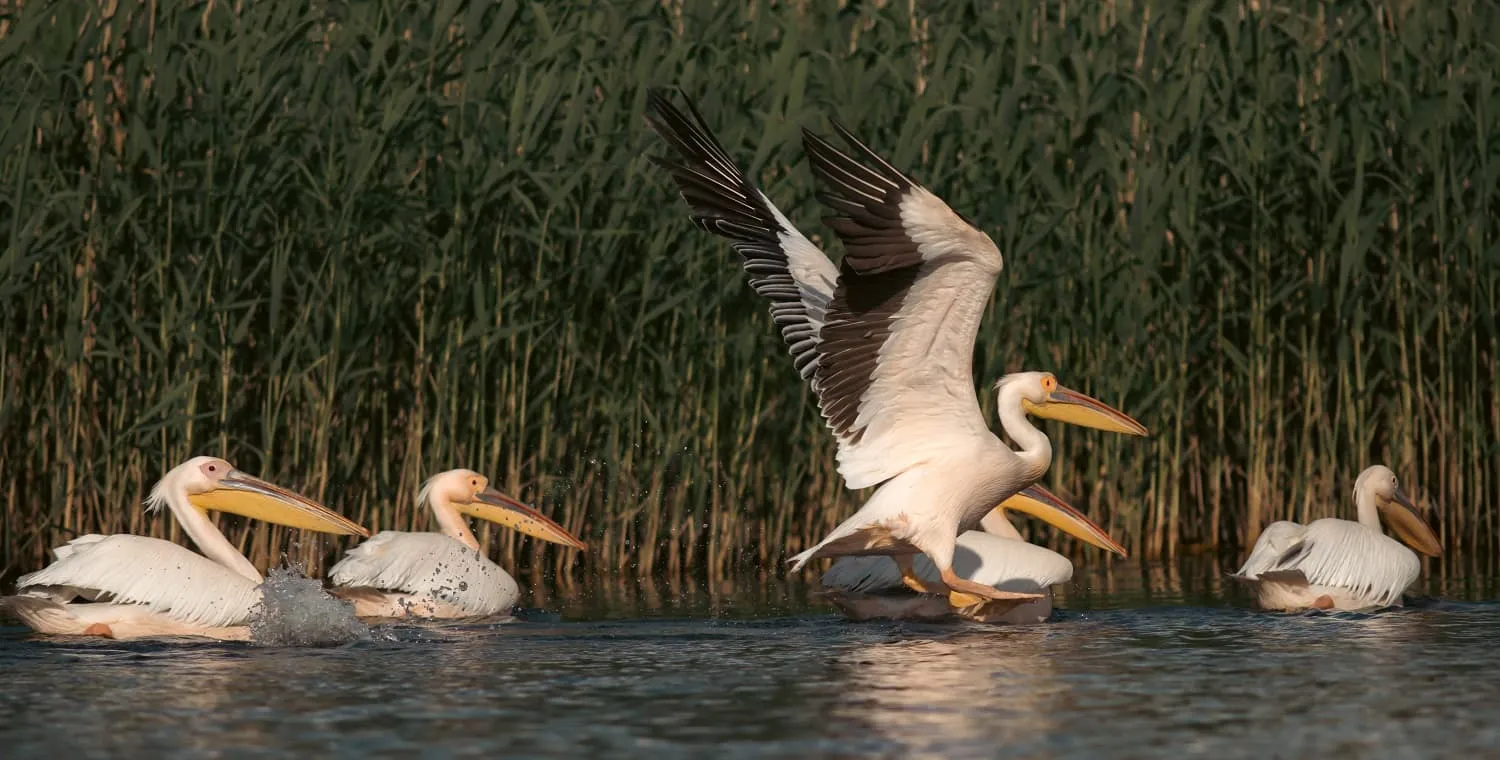
Atanasovsko Lake, Lake Vaya, Lake Mandra and Poda form an exceptionally valuable network of wetlands. They provide food, shelter and resting places during long migrations. For many birds, these stopovers are essential before the next stage of their journey.
This natural wealth makes the region an attractive destination beyond summer. Birdwatching can become part of a peaceful Black Sea coastal escape, far from crowded seaside resorts.
Can you watch birds near Burgas in winter?
The end of autumn migration does not mean the lakes become empty. During winter, ducks, grebes, cormorants and other waterbirds arrive in the region. Dalmatian pelicans can also be observed when conditions are suitable. Via Pontica offers a different experience in every season. If you are planning a visit during the colder months, discover more ideas in our winter travel guide to Bulgaria’s Black Sea coast. Sometimes, all you need to do is look up at the sky. The next flock may already be passing overhead.