


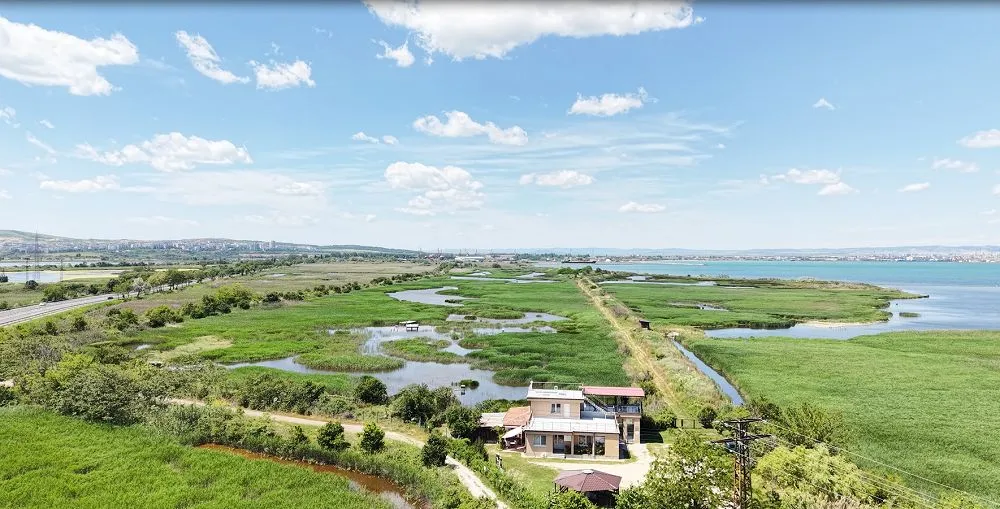

Most people drive right past it. They are accelerating along the main road between Burgas and Sozopol, windows down, the Black Sea glittering on one side, the promise of a sandy beach or a historic old town on their minds. The GPS points them toward a parking lot that looks, from the outside, like a simple stop by an old bridge. They hesitate. The landscape doesn’t scream “world-class wonder.” It looks like a quiet, unassuming patch of marshland. And that is the first mistake.
It is also the first secret. Because beneath that unassuming surface lies one of the most concentrated spectacles of avian life on the entire European continent. This is Poda, and looking at it from a speeding car is like skipping the first twenty minutes of a thriller. You’re missing the setup, the characters, and the plot twist. The plot twist, in this case, is that almost every bird you’ve ever heard of, and many you haven’t, are about to perform a drama of migration, survival, and breathtaking beauty right before your eyes.
We’re going to fix that. By the end of this piece, you won’t just know what Poda is. You’ll have the tools, the secrets, and the mental roadmap to have an experience most tourists will never understand. We will build you a perfect day trip, unlock the mysteries of its feathered inhabitants, and, yes, get you that coveted stamp for your 100 National Tourist Sites collection.
But first, let’s talk about why you almost missed it.
Birdwatching near Kraimorie: The 100-hectare stage where a world unfolds
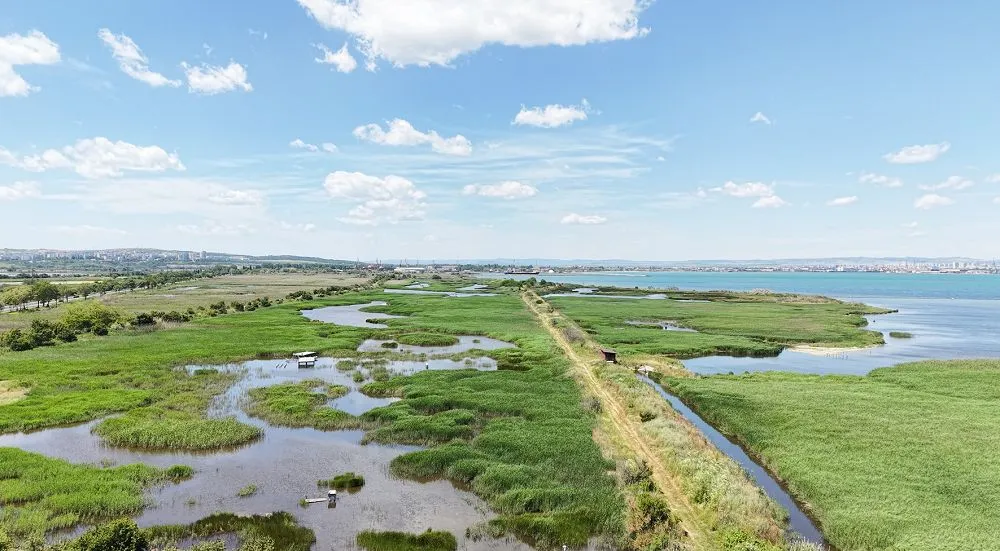
The problem with natural wonders is often their scale. You need to travel to the Serengeti for the great migration. You need to hike for days to see the canopy of a rainforest. The sheer size can be overwhelming. But when it comes to birdwatching, Poda operates on a completely different principle. It’s a world compressed.
One hundred hectares. That’s about 1 square kilometer. To put that in perspective, you could fit more than 140 football pitches in that space. But for the birds, it’s a five-star hotel, a Michelin-starred restaurant, and a global meeting point all rolled into one.
Here’s the number that should make you stop reading and start planning: 315 species of birds have been recorded here. That is a quarter of all the bird species in Europe, concentrated in an area you could walk across in under an hour . This isn’t just birdwatching; it’s like walking into a natural history museum where the exhibits are alive and performing.
A Hypothesis of history
Why here? The answer is a confluence of geography, geology, and a bit of happy accident.
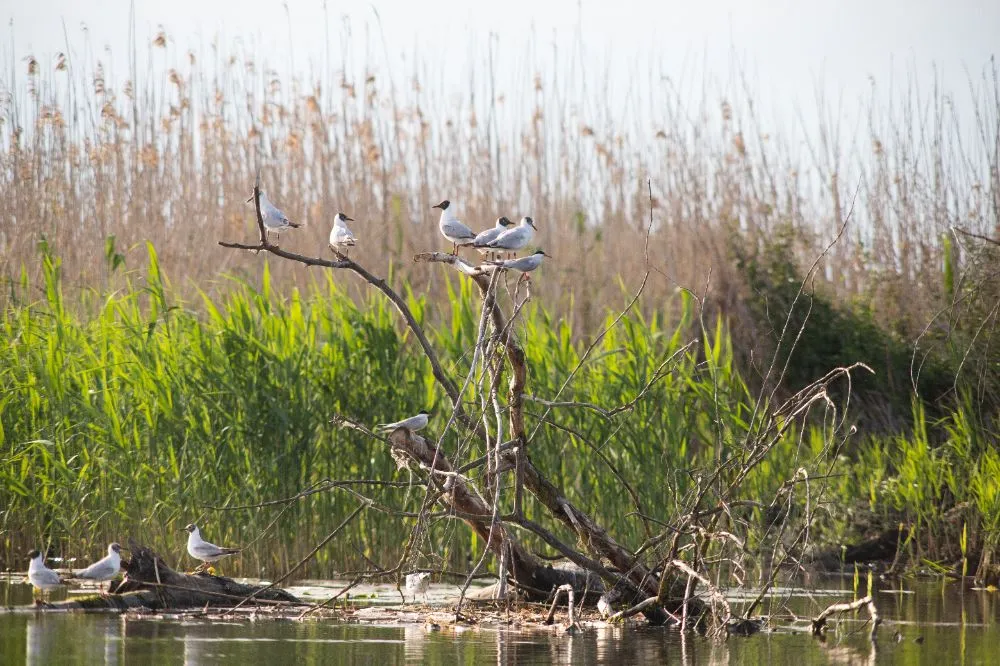
First, you have the three water types. Poda contains a rare trifecta of habitats: freshwater, saltwater, and brackish (mixed) basins . For birds, this is like offering a menu with every cuisine imaginable. The freshwater areas attract certain insects and plants, the saltwater brings in brine shrimp and fish, and the brackish zone provides a perfect middle ground for wading birds.
Second, and most critically, is its position on a superhighway.
Europe’s second-largest migratory route, the Via Pontica, passes directly overhead.
Imagine being a bird. You’ve spent the summer in Scandinavia. The days are getting shorter. You need to fly south to Africa. You must cross the massive Black Sea. Poda appears like the perfect service station right before the big stretch. It is a narrow bottleneck of land offering safety, food, and a place to rest. This is why, every spring and autumn, the sky above Poda becomes a river of wings. It’s the reason 75% of the European white stork population, over 250,000 birds, can be seen here in a single season .
You are standing on the equivalent of a London Underground platform during rush hour, but instead of commuters, you have pelicans, eagles, and storks .
Your day trip blueprint: The unforgettable hour (or day)

You have decided to go. Excellent. Now, let’s make sure it’s an experience, not just a visit. Birdwatching near Kraimorie rewards preparation, and we’re going to give you everything you need.
The setup
Here’s the mistake most people make: they rush. They might stop for a quick look, tick a few boxes, and then get back in the car. But Poda is a place that rewards patience. The birds know their routine. The show starts early, peaks in the late afternoon, and has a different cast every season.
The preparation:
Time: An hour is enough for a highlight reel. A day is enough to become a different person. Seriously. The transformation from “tourist” to “observer” happens when you sit still long enough to see the characters emerge.
Gear: You don’t need to be a professional. The Nature Conservation Centre provides binoculars and spotting scopes . They even have experts on hand to help you focus. This is a massive hidden value that removes the barrier to entry. If you are a fervent photographer, you can rent a dedicated photo hide . This is like getting backstage access. You become invisible, and the birds forget you’re there, allowing for intimate portraits of their lives.
The Stamp: This is a key to a wider adventure. Poda is officially one of the 100 National Tourist Sites of Bulgaria . You can buy a book at the center and get it stamped. This seemingly simple act transforms your visit. It’s a tangible piece of a larger story, a passport to a whole network of Bulgarian wonders.
The arrival
Getting there is straightforward if you know the trick.
By car:
Coming from Burgas (heading south), you’ll pass the Lukoil and Petrol stations. You need to take the exit for Malko Tarnovo-Kraymorie. Use the overpass to turn around, heading back toward Burgas. Pass the bus stop, and in 160 meters, you’ll see the parking lot.
Coming from Sozopol (heading north), you’ll pass under the Kraymorie overpass, pass the bus stop, and in 160 meters, the parking lot is on your right.
By bus:
Take city bus number 17 from Avtogara Yug (South Bus Station). Don’t get off at the last stop in Kraymorie. Stay on the bus and get off at the first stop on the way back to Burgas—it’s called “Poda” .
The GPS coordinates for the parking lot are 42.442767 N and 27.469618 Е.
From the car park, you walk across the old bridge over the canal. You’ll see the centre, a two-storey building that serves as your base camp for your birdwatching near Kraimorie adventure.
The observed
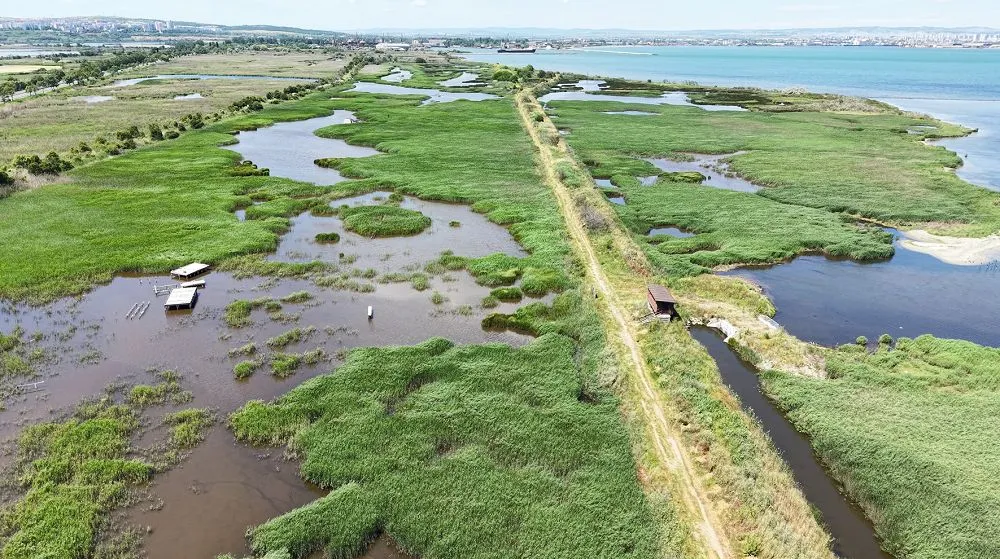
Once inside, the world changes. You are no longer in coastal Bulgaria. You are in a nature documentary.
From the observation terrace, the first thing you’ll notice is the noise. It’s a symphony of squawks, calls, and cackles. Your eyes will start to pick out shapes.
The “big five” of Poda:
You’re here to see the mixed colony. It is unique on the Bulgarian Black Sea coast . Look for the spoonbill with its bizarre, spoon-shaped bill. Watch the glossy ibis shimmer in the sunlight as it forages. The pygmy cormorant, a globally endangered species, often sits with its wings spread, drying them .
The avian cast:
Depending on the season, you’ll spot herons—night, red, squacco, little, and great egrets—all hunting in the shallows . And just when you think you’ve seen everything, a majestic white-tailed eagle might drift lazily across the sky, scattering the smaller birds like a shark passing through a school of fish.
And the birds are just the main characters. The supporting cast is equally impressive. The area is home to the largest snake in Bulgaria (the four-lined rat snake) and the smallest mammal in Europe by mass (the Etruscan shrew) .
The unexpected transformation
The shift in perception
Here is where Poda stops being a “destination” and starts becoming an experience. It’s a psychological shift.
It usually happens an hour or two in. You’ve stopped frantically searching the sky. You’ve let the staff, those charming bird experts who are the beating heart of the BSPB (Bulgarian Society for the Protection of Birds), take over. They’ll offer a talk or a guided tour for just 15 leva .
They tell you stories. History. How this area was the first protected area in Bulgaria managed by an NGO, the BSPB, which was founded way back in 1988 by scientists and bird lovers . They tell you about the work they do: the conservation, the protection of the red-breasted goose, the imperial eagle, the griffon vulture.
Suddenly, the place has a soul. It’s not just a pretty view; it’s a battlefield for survival and a success story of conservation .
But here’s the expert secret…Most visitors, even the informed ones, miss the single most profound thing Poda offers. They focus entirely on the birds in the air, but the real secret is in the timing. The seasons transform the experience so completely it feels like visiting a different country.
Most people think of spring migration. But the real secret is summer and winter.
The summer secret: While everyone else is at the beach, Poda is in its breeding season. This is when the colony is at its most frantic. You can see the great cormorants nesting on the abandoned electrical pylons—a bizarre, post-apocalyptic image of nature reclaiming infrastructure .
The winter secret: The bay of Foros, next to Poda, becomes a refuge for the northern birds. The temperature drops, and the cast changes again. You will see the near-threatened Dalmatian pelicans, elegant tundra swans, flocks of wild geese, and even the globally-threatened red-breasted goose . It is an experience that feels secretive, as if you’ve stumbled into a hidden world only accessible to those willing to brave the cold.
The hidden system
If you’ve read this far, you are not a casual browser. You are an explorer. And explorers need hidden systems.
So here it is:
While most people will do the walk and the terrace, the true hidden gem is the rental of the photo hides . These are camouflaged shelters placed in strategic locations.
But the system isn’t just for photographers. The real secret is that you can request a hide for observation, not just photography. You don’t even need a camera. You can book a hide and simply sit inside, separated from the world, for an hour or two. And you become invisible. The spoonbills, the herons, and the ibises will start to forage right in front of you, completely unaware. They will preen, fight, court, and feed. You will see behavior that is simply invisible to anyone standing on the terrace .
This is the difference between watching a documentary and being in the documentary. It requires advance contact, especially for accommodation, but it is the ultimate way to experience Poda.
The recap: your Poda playbook
What is it? A 100-hectare protected wetland, managed by the BSPB, that is a one-square-kilometer miracle of biodiversity .
Why go? To see 315 species of birds—a quarter of Europe’s diversity—in a single location. The only place on the Bulgarian coast with a mixed colony of spoonbills, ibises, and herons .
The experience: use the centre’s telescopes. Talk to the experts. Take a walk on the visitor’s trail. Get the stamp for the 100 National Tourist Sites .
The expert secret: visit in winter for pelicans and geese, or go in summer for the breeding colony. Rent a hide to go from a visitor to an observer.
Getting there: bus 17 from Burgas, or drive and follow the directions. GPS: 42.442767 N, 27.469618 E.
Open: Monday–Sunday, 9:00 AM – 5:00 PM.
The water is calling. The birds are waiting. You have the map. All that’s left is to get in the car, pass that old bridge, and step into a world that feels like nowhere else on earth.
Continue planning your nature trip with our Poda Conservation Center guide and winter in Kraimorie.